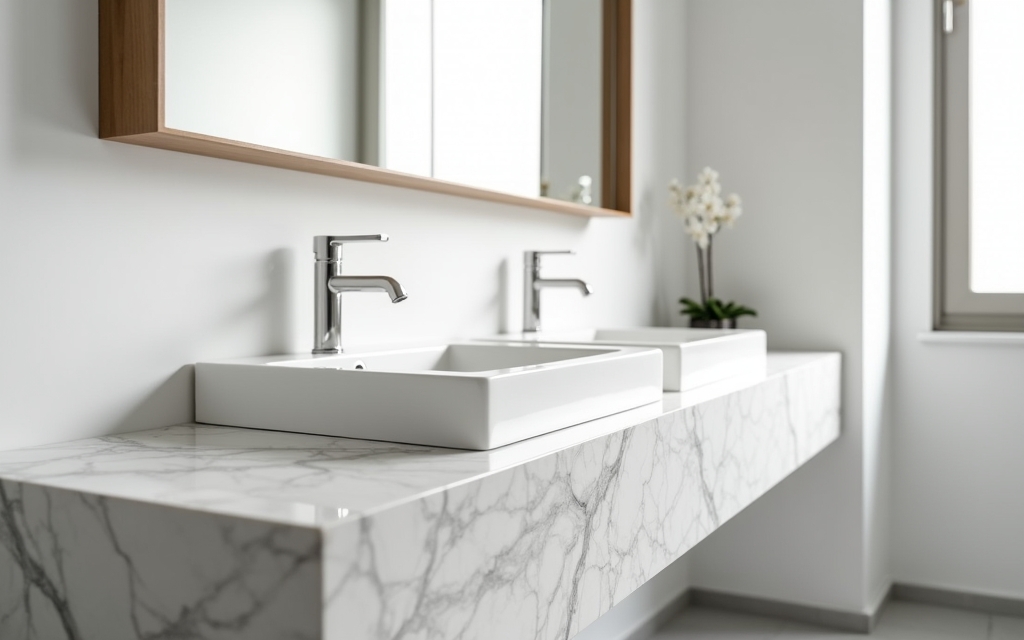
What Is Dolomite Stone?
Dolomite is a sedimentary carbonate rock composed primarily of the mineral dolomite — calcium magnesium carbonate. While often classified alongside marble, dolomite is significantly harder and more resistant to etching and staining, making it an excellent choice for high-traffic areas.
Key Properties of Dolomite
- Hardness: 3.5-4 on the Mohs scale (harder than most marbles at 3-3.5)
- Density: 2.8-2.9 g/cm³ (denser than typical marble)
- Water absorption: Typically below 0.2% (excellent for wet areas)
- Compressive strength: 100-180 MPa (suitable for load-bearing applications)
- Acid resistance: Better than marble, though sealing is still recommended
Popular Turkish Dolomite Varieties
Nimbus White Dolomite
A clean white background with subtle grey veining, Nimbus White is one of the most sought-after dolomites from Turkiye. Its crisp appearance makes it perfect for kitchen countertops and bathroom vanities where a bright, modern look is desired.
Bianco Lupo Dolomite
Featuring a slightly warmer white base with delicate linear veining, Bianco Lupo offers a sophisticated alternative to Calacatta marble at a more accessible price point. View our Bianco Lupo collection.
Best Applications
Kitchen Countertops
Dolomite excels in kitchens. Its higher hardness means better scratch resistance than marble, and its lower porosity means fewer etching marks from acidic foods like lemon juice or wine. For kitchen use, a honed finish is recommended — it hides fingerprints and minor wear better than polished.
Bathroom Surfaces
The low water absorption rate makes dolomite ideal for bathroom vanities, shower walls, and tub surrounds. Unlike marble, dolomite is less likely to develop water spots or soap scum etching.
Flooring
For high-traffic commercial and residential floors, dolomite outperforms marble in durability. Consider brushed or honed finishes for slip resistance in wet areas.
Dolomite vs Marble: Quick Comparison
- Durability: Dolomite wins — harder and less prone to etching
- Aesthetics: Marble offers more dramatic veining; dolomite tends toward subtler patterns
- Maintenance: Dolomite requires less frequent sealing
- Price: Turkish dolomite is often more affordable than comparable marble varieties
- Availability: Turkiye has abundant dolomite reserves with consistent supply
Sealing and Maintenance
While dolomite is more resistant than marble, we still recommend sealing it with a high-quality impregnating sealer. Reseal every 2-3 years for countertops and every 3-5 years for floors. Daily cleaning with a pH-neutral stone cleaner is all that is needed.
Explore our full dolomite collection or contact our team for personalized recommendations based on your project requirements.