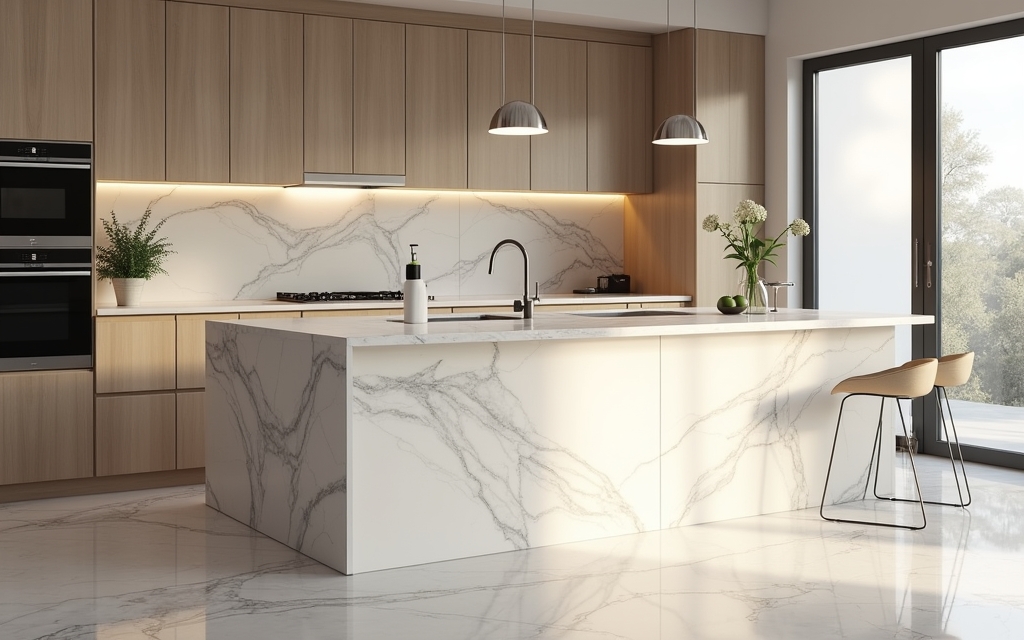
The Timeless Allure of Marble Countertops
For centuries, marble has been the material of choice for royalty, master architects, and celebrated artists. Today, this metamorphic rock has seamlessly transitioned from grand palaces and historical monuments into the heart of the modern home: the kitchen. A marble countertop is much more than a functional workspace; it is a statement piece that radiates luxury, elegance, and timeless sophistication. However, specifying and installing marble in a high-traffic environment requires a deep understanding of the material. This comprehensive guide provides architects, interior designers, and homeowners with everything they need to know about selecting, designing with, and maintaining marble kitchen countertops.
Why Choose Marble for Your Kitchen?
While many alternative surface materials exist today, marble continues to hold a unique position in the design world. Its distinct advantages make it a worthwhile investment for those who appreciate natural beauty and character.
Unmatched Aesthetic Appeal
The primary draw of marble is its sheer beauty. No two marble slabs are exactly alike. The intricate veining, caused by mineral impurities present during the stone's formation deep within the earth, ensures that your countertop is entirely unique. The translucent quality of high-quality marble allows light to penetrate the surface slightly, giving the stone a luminous, three-dimensional depth that engineered quartz simply cannot replicate.
Heat Resistance and the Baker's Secret
From a practical standpoint, marble is incredibly heat resistant. You can place hot pots and pans directly onto the surface without worrying about scorching or melting the material. Furthermore, marble naturally stays cool, making it the undisputed premier surface for bakers and pastry chefs. Rolling out dough on a marble countertop prevents the butter in pastry from melting, resulting in flakier, more perfect crusts.
Increased Property Value
A well-designed kitchen is a major selling point for any home, and natural stone countertops are a highly sought-after feature. Installing premium marble countertops signals quality and luxury to potential buyers, offering an excellent return on investment should you ever choose to sell the property.
Selecting the Right Marble for Your Space
Choosing the perfect marble involves understanding the different types available and how their distinct characteristics will influence the overall kitchen design.
Classic White Marble Varieties
White marble remains the most popular choice for kitchen countertops. Carrara marble, sourced from Italy, features a light gray background with soft, feathery veining, making it a versatile and understated option. Calacatta marble is rarer and more luxurious, boasting a bright white background with bold, dramatic, dark gray or gold veins. Statuario marble sits between the two, offering a crisp white base with striking, concentrated gray veining that commands attention.
Embracing Darker Tones
For a more dramatic or contemporary aesthetic, dark marbles like Negro Marquina offer a striking contrast. This deep black marble features stark white veins, creating a highly graphic visual impact. Darker stones are excellent for hiding minor imperfections and can serve as a grounding element in a brightly lit kitchen.
The Turkish Marble Advantage
While Italy is famous for its white marbles, Turkey is globally recognized as one of the premier sources of diverse, high-quality natural stone. Turkish marble quarries yield an incredible array of colors, from pristine whites and soft beiges to rich emeralds and deep blacks. For large-scale projects or custom builds, partnering with a reputable supplier like Atlasia Trading provides direct access to Turkey’s finest quarries, ensuring exceptional quality, competitive pricing, and a reliable supply chain for international buyers and designers.
Maintenance and Durability: What Buyers Need to Know
To make an informed decision, architects and homeowners must understand the physical properties of marble. It is a porous, calcium-carbonate-based stone, which means it requires a specific level of care compared to granite or quartz.
Understanding Etching and Staining
The most important concept to grasp is the difference between staining and etching. Staining occurs when a colored liquid, like red wine or coffee, is absorbed into the porous stone if left unsealed. Etching, on the other hand, is a chemical reaction. Acidic substances like lemon juice, vinegar, or tomato sauce will react with the calcium carbonate, leaving a dull, lighter spot on the surface. Etching cannot be cleaned away; it requires professional honing or polishing to remove.
The Importance of Sealing
Protecting your marble countertop requires the application of a high-quality, penetrating stone sealer. This sealer sits below the surface and prevents liquids from being absorbed. For a busy kitchen, the countertop should be sealed upon installation and resealed every six to twelve months, depending on the specific type of marble and the usage of the kitchen.
Daily Cleaning Best Practices
Maintaining marble is straightforward once the proper habits are established. Designers should advise their clients to follow these simple rules:
- Wipe up spills immediately, especially acidic substances like wine, citrus, and vinegar.
- Use a soft microfiber cloth and a pH-neutral stone cleaner for daily wiping.
- Avoid abrasive cleaning pads, scouring powders, or bleach-based products.
- Always use cutting boards to prevent scratching the surface and to maintain the integrity of your kitchen knives.
- Use trivets or hot pads under extreme heat, despite marble's natural heat resistance, to prevent potential thermal shock.
Expert Design Tips for Professionals
Integrating marble into a kitchen requires careful planning to ensure the material shines and the space remains functional. Architects and designers should consider these advanced strategies when specifying marble.
Mastering the Art of Bookmatching
Bookmatching is a technique where two consecutive marble slabs are polished on opposite sides and placed side by side, much like the pages of an open book. This creates a stunning mirror-image effect that is particularly breathtaking on large kitchen islands or waterfall edge features. To achieve a successful bookmatch, designers must work closely with their stone supplier to select slabs with symmetrical veining patterns and clearly mark the orientation during the templating phase.
Choosing the Right Edge Profile
The edge profile of a marble countertop can drastically alter the perceived thickness and style of the kitchen. A simple eased or flat polished edge offers a sleek, modern look. A beveled edge adds geometric interest, while an ogee edge provides a traditional, classical feel. For a contemporary aesthetic, designers often specify a mitered edge, which cuts the stone at a 45-degree angle to make a standard two-centimeter slab appear as a massive, monolithic block.
Harmonizing with Cabinetry and Backsplashes
Because marble is a natural work of art, it is often best to let it be the focal point of the kitchen. Pair heavily veined Calacatta marble with sleek, minimalist cabinetry in flat-panel designs and muted colors to avoid visual competition. Alternatively, use a subtle Carrara marble to complement rich, dark wood finishes or colorful tile backsplashes. Using the same marble for both the countertop and the full-height backsplash is a popular trend that creates a seamless, high-end look, though it requires a significant amount of stone.
Conclusion
Marble countertops remain the ultimate expression of luxury in kitchen design. While they demand a bit more attention and care than man-made alternatives, the unparalleled beauty, historical prestige, and unique character they bring to a space are well worth the effort. By understanding the different varieties, adhering to proper maintenance protocols, and utilizing thoughtful design techniques, professionals and homeowners alike can ensure their marble kitchen remains a breathtaking centerpiece for decades to come.