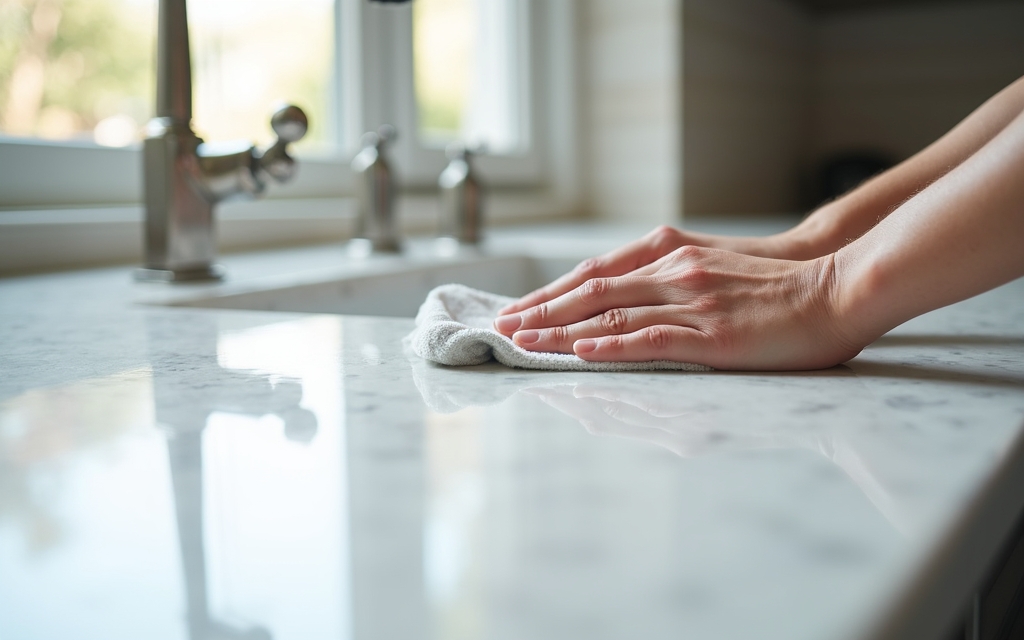
Why Sealing Matters
Natural stone is porous — even dense marbles have microscopic channels that can absorb liquids, leading to stains, etching, and deterioration over time. A quality sealer creates an invisible barrier that protects the stone while maintaining its natural beauty.
Whether you’re working with marble, travertine, or limestone, understanding the sealing process is critical for long-term performance.
Which Stones Need Sealing?
- Marble (polished) — Low porosity, but still benefits from sealing in wet areas
- Marble (honed) — Medium porosity, sealing recommended
- Travertine — High porosity due to natural voids, sealing essential
- Limestone — High porosity, sealing absolutely required
- Dolomite — Medium porosity, similar to marble
Types of Sealers
Penetrating (Impregnating) Sealers
The most common and recommended type. These sealers soak into the stone and create a protective barrier below the surface without changing the appearance. They allow the stone to “breathe” while repelling water and oil-based stains.
Topical Sealers
These form a protective film on the surface. While they offer excellent stain protection, they can alter the look of the stone and may require more frequent reapplication. Best reserved for high-traffic commercial floors.
How to Apply Sealer
- Clean thoroughly — Remove all dust, dirt, and existing stains
- Ensure stone is completely dry — Wait at least 24 hours after cleaning
- Apply evenly — Use a clean microfiber pad or sprayer
- Allow absorption — Let the sealer penetrate for 15-20 minutes
- Wipe excess — Remove any pooled sealer with a clean cloth
- Cure time — Wait 24-48 hours before exposing to moisture
How Often to Reseal
Test your stone annually by placing a few drops of water on the surface. If the water beads up, the sealer is still effective. If it absorbs within 30 seconds, it’s time to reseal.
- Indoor floors: Every 2-3 years
- Countertops: Every 1-2 years
- Outdoor applications: Annually
- Shower walls: Every 1-2 years
Daily Maintenance Tips
- Use pH-neutral cleaners specifically designed for natural stone
- Avoid vinegar, bleach, or acidic cleaners — they will etch marble and limestone
- Wipe spills immediately, especially acidic liquids (wine, citrus, coffee)
- Use coasters under glasses and trivets under hot dishes
- Sweep or dust mop floors regularly to prevent scratching from grit
Need Expert Advice?
At Atlasia Trading, we provide care and maintenance guidelines with every shipment. Contact our team for specific recommendations based on your stone type and application.