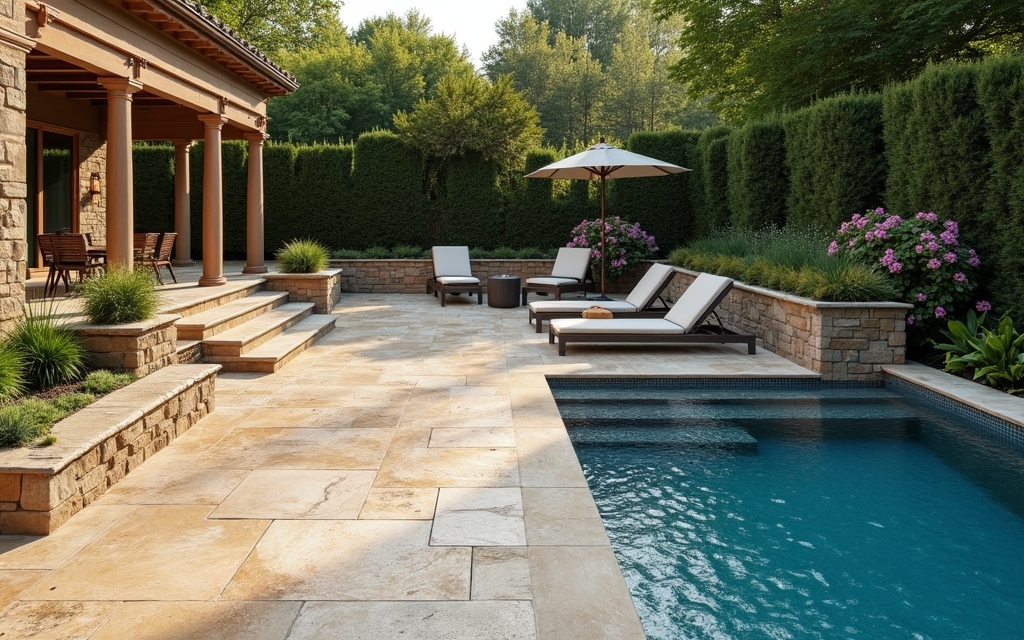
Why Travertine is the Premier Choice for Pool Decks
When specifying materials for high-end residential or commercial outdoor spaces, natural stone stands unmatched in both aesthetic appeal and structural integrity. Travertine pool decks have become the gold standard for architects and designers due to their exceptional physical properties. Unlike concrete, brick, or traditional ceramic tiles, travertine remains remarkably cool to the touch even under direct, intense sunlight. This natural cooling effect is the result of the stone's porous structure, which allows air to circulate beneath the surface, ensuring barefoot comfort for pool users.
Beyond thermal regulation, travertine offers inherent slip resistance. The same microscopic pores that keep the stone cool also provide traction when the surface is wet, fulfilling a critical safety requirement for any aquatic environment. Furthermore, premium travertine boasts a high tensile strength and excellent freeze-thaw resistance. This makes it a viable, long-lasting paving solution for various climates, preventing cracking or deteriorating when exposed to harsh winters or extreme temperature fluctuations.
Selecting the Right Finish and Color for Your Design
The visual impact of a pool deck relies heavily on the finish and color palette chosen for the stone. For pool environments, a tumbled or brushed and chiseled finish is highly recommended by industry professionals. These textured finishes enhance the natural grip of the stone, blending safety seamlessly with rustic, Mediterranean, or contemporary design aesthetics. A polished or highly honed finish should be strictly avoided in wet zones due to severe slip hazards.
Color selection dictates the overall mood of the landscape and influences thermal performance. Lighter hues, such as classic Ivory, Walnut, or Silver, reflect sunlight and keep the surface temperature significantly lower than darker alternatives. For a dramatic contrast against blue water, darker shades like Noche offer a striking, modern appeal. As a trusted Turkish stone supplier, Atlasia Trading provides direct access to these exclusive Denizli basin colorways, ensuring architects receive consistent, premium-grade batches with the precise tonal variations required for their specific projects.
Essential Installation Tips for Longevity and Safety
Proper installation is just as critical as material selection to prevent shifting, water damage, or structural failure. Architects and contractors should adhere to strict technical guidelines when specifying travertine pool decks:
- Base Preparation: A properly compacted aggregate base followed by a layer of concrete sand is standard for pedestrian applications. However, for heavy-duty commercial pools or areas expecting vehicular traffic, a reinforced concrete slab with a thick mortar setting bed provides the highest structural integrity.
- Drainage Slope: The sub-base must be sloped away from the pool and adjacent structures. A minimum slope of one-quarter inch per foot is the industry standard to prevent standing water, which can lead to algae growth, mineral buildup, and slippery conditions.
- Pool Coping Integration: Use matching travertine bullnose or drop-face coping to create a smooth, safe transition from the pool edge to the deck. This eliminates sharp edges and provides a cohesive, finished look.
- Joint Width and Material: Maintain consistent joint spacing—typically three-eighths to half an inch—and fill with polymeric sand or a high-quality outdoor stone grout. This prevents weed growth, deters insects, and locks the pavers firmly in place to resist lateral shifting.
- Breathable Sealing: Although travertine is highly durable, applying a penetrating, breathable sealer is crucial. It protects the stone from chlorine, salt water, and organic stains without trapping moisture inside, which could otherwise cause spalling or efflorescence.
Innovative Layout Patterns to Elevate Outdoor Spaces
The layout pattern chosen for the travertine pavers can dramatically alter the spatial perception of the pool area. The French pattern, also known as the Versailles pattern, remains the most popular choice for classic and Mediterranean-inspired designs. It utilizes a repeating combination of differently sized tiles to create an organic, seamless look that inherently hides minor imperfections in the laying process.
For modern, minimalist, and contemporary architectural projects, a linear ashlar pattern or large-format square sets are ideal. These geometric patterns emphasize clean lines and precision, allowing the natural veining of the stone to become the focal point. When designing transitions between the pool deck and surrounding pathways or outdoor kitchens, maintaining the same pattern but altering the direction of the stones can subtly define different functional zones without causing visual interruption.
Conclusion
Specifying travertine for pool decks offers an unparalleled combination of safety, durability, and timeless elegance. By carefully selecting the appropriate finish, adhering to rigorous installation standards, and utilizing strategic layout patterns, design professionals can deliver outdoor environments that stand the test of time. Sourcing premium materials directly from the origin ensures the highest quality results, and partnering with an experienced exporter like Atlasia Trading guarantees that architects and buyers receive exceptional Turkish natural stone tailored to their exact specifications.